
After-School Activities That Build Confidence Abroad

Your daughter comes home and says her classmates all go to a club after school, and she doesn't know anyone there. Or your son comes home quiet because he's the only one in his class from an Arab background, and no one shares what he loves.
On June 13, 2026, the UK government announced new benchmarks for enrichment activities in the schools and colleges of England, aimed at helping students gain the skills, confidence and relationships they need for life and work. It also said a survey of more than 14,000 young people found high levels of isolation.
This article explains how to choose after-school activities that build your son or daughter's confidence and sense of belonging in a new country: what the official guidance says, what gets in the way in the United States, how to pick an activity that suits them, and what they study in school computing so the activity adds something new.
How are after-school activities linked to their confidence and belonging?
The UK government links extracurricular activities to confidence, resilience, a sense of belonging at school, mental health and attainment. But it relies on international evidence that the government itself presents, and it can't guarantee the result for every young person.
According to the background document published June 15, 2026, young people said these activities improved their sense of agency, resilience and confidence about their future. The framework is guidance for England, but it gives you clear language for what to look for in any country.
What kinds of activities does the official guidance recommend?
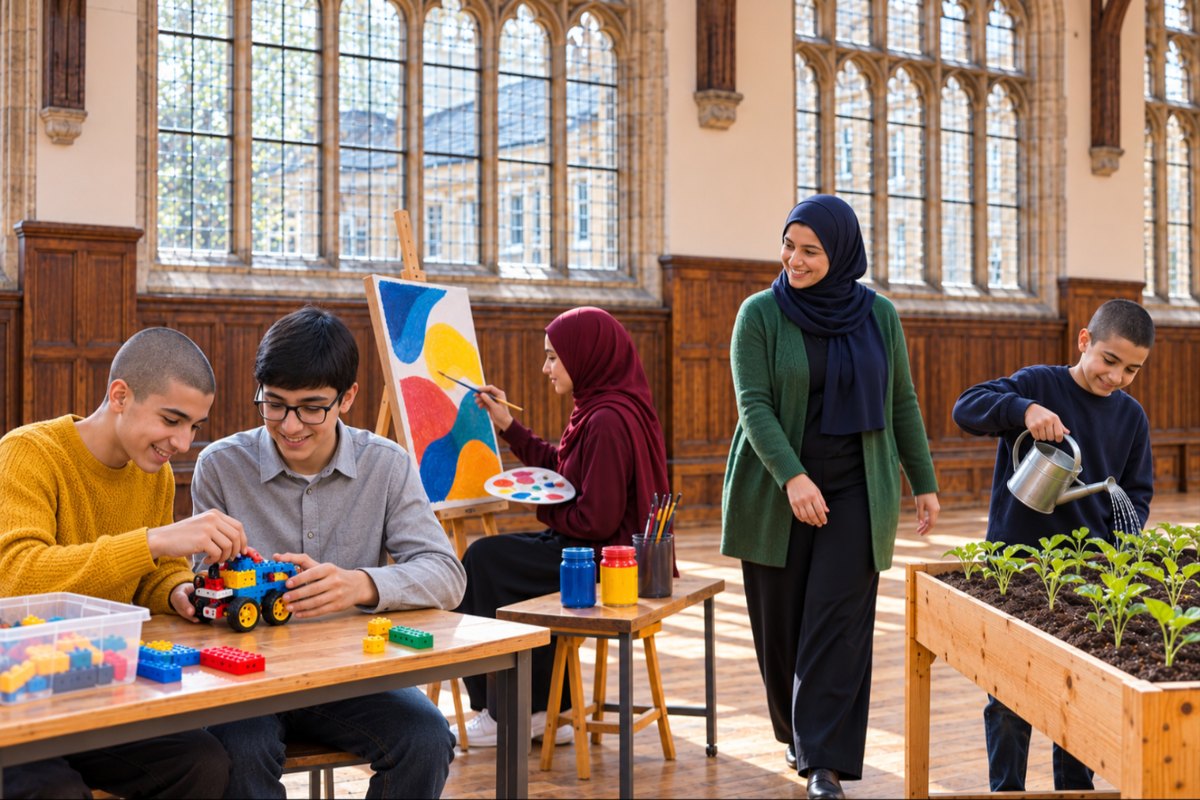
The English framework groups activities into five categories, with these examples for each:
- Civic engagement: volunteering and debating.
- Arts and culture: music, drama and museum visits.
- Nature, outdoors and adventure: gardening, sustainability projects and residential trips.
- Sport and physical activity: team sports and fitness.
- Wider life and future skills: digital literacy, STEM clubs, enterprise, cooking and money management.
The same document says research suggests 98% of schools offered at least one extracurricular activity in 2024 to 2025. So start by asking their school what's available.
Read also: How to rebuild your son or daughter's self-confidence
What about after-school activities in the United States?
The problem there is often access, not the idea. According to Afterschool Alliance, in a series based on a survey of more than 30,000 parents, with its middle school brief published in December 2025, parents of 49% of middle school students not enrolled in a program said they would enroll them if one were available.
The main barriers for parents at that age: cost (56%), no safe way to get to and from the program (48%), inconvenient locations (47%), and no program in their community (41%). If you face the same obstacles, start with a school club or a small group nearby, and don't wait for a perfect program.
How do you choose the right activity for them?
Choose what they enjoy and will stick with, not what you wish they enjoyed. These steps help:
- Start from their interest: ask what makes them lose track of time.
- Pick an activity that ends in something shown: a match, a performance, an exhibition or a project.
- Look for a steady group: peers they meet every week, since repetition gives them time to get to know them.
- Try it for one term: then ask: what did you like, and what wore you out?
- Think about the journey from the start: who takes them and brings them back? Transport is a big barrier, as we saw.
- Don't fill their week: one or two activities, with free time, rest and sleep.
How do you know an activity suits them?
You'll learn it from how they act afterward more than from what they say. After two or three weeks, look for these signs:
- They bring it up on their own: they mention what they did, or people they met, without being asked.
- They get ready with some enthusiasm: or at least without repeated resistance.
- They show what they made: they show you a project or tell you about a moment they liked.
- They come home tired in a good way: not anxious or upset about the place.
If they keep refusing to go or are clearly upset, listen first, then talk to their teacher. And if it grows into refusing school itself, read what to do if they refuse to go to school.
What if they're the only one from their background in class?
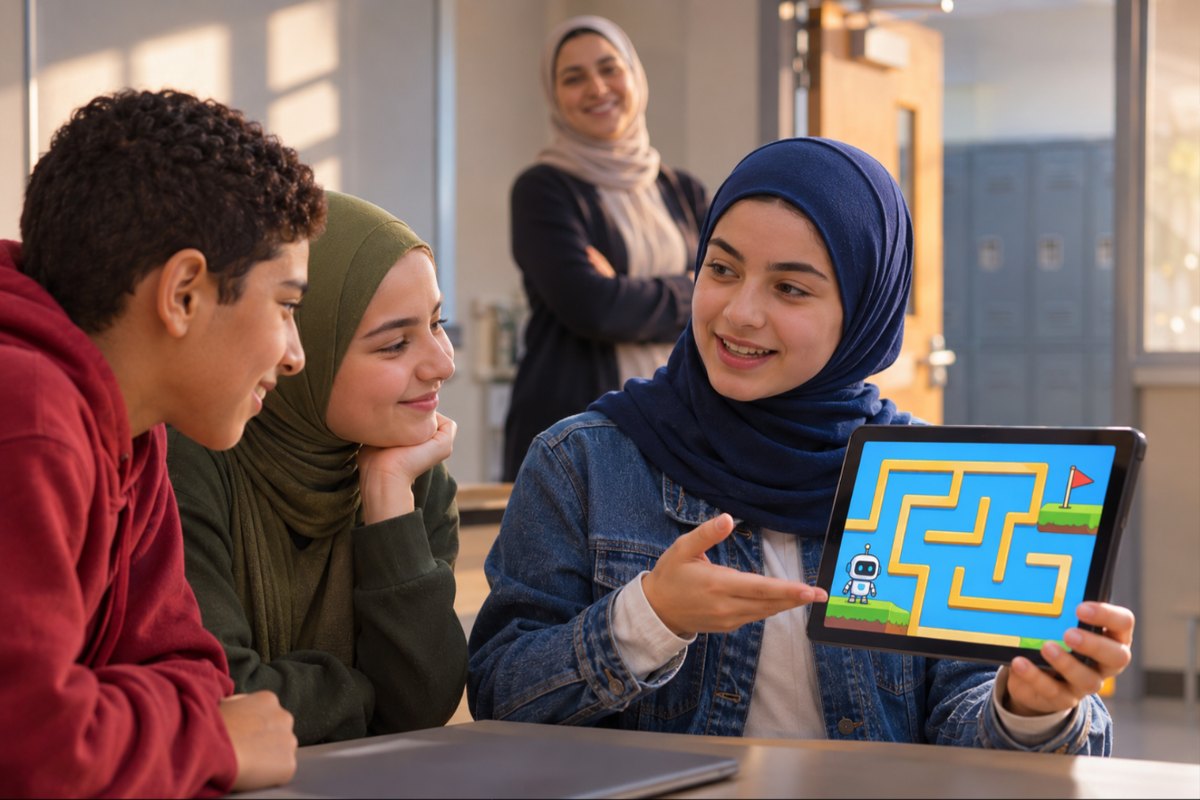
Make their activity a chance to be seen for what they make, not for how they differ. They don't have to represent their culture to everyone, or explain their identity every time.
- Choose an activity built on doing, not talking: a project, a game or a performance that speaks for itself.
- Let them decide what to share: they may like adding a touch of home to a project, or not, so respect their choice.
- Invite one friend: having a friend with them in the activity may change how the place feels.
- Talk to their teacher: ask about activities that fit their interests, and how their work could be shown in class.
Read also: Practical steps to support a shy son or daughter at school
What do they learn in school computing?
It differs from country to country and school to school. This is what official sources confirm:
- In England: the national curriculum for computing says students in key stage 1 (ages 5 to 7, per the key stages page) create and debug simple programs, in key stage 2 (7 to 11) design and write programs for specific goals, in key stage 3 (11 to 14) use at least two programming languages, one of them textual, and in key stage 4 (14 to 16) go deeper into computer science, digital media and IT.
- With a catch: academies and private schools don't have to follow the national curriculum, so ask your school what it actually teaches. The government says the new curriculum will first be taught in September 2028.
- In the United States: according to a Code.org report released December 10, 2025, 60% of public high schools offer foundational computer science, and only 12 states require it to graduate. So it depends on your state and school.
If they don't build a project in class that ends in a showing, look for an activity that gives them that. To compare with Arab schools, read our piece on coding and AI in schools in Egypt and the Gulf.
How does Megaminds Academy help them after school?
At Megaminds Academy, we teach students aged 6 to 16 coding and game design, robotics and AI in live online classes, in small groups with certified instructors. Because classes are online, there's no commute, an obstacle 48% of middle school parents named in the Afterschool Alliance survey. Every student builds real projects and earns an accredited certificate after each level.
Frequently asked questions about after-school activities
How many activities are enough?
There's no official number that fits everyone. Start with one they enjoy for a full term, then add a second only if they still have time for rest, sleep and homework. One they stick with beats five they drop.
Are after-school activities required of schools?
There's no single rule across countries. In England the government offers a framework and benchmarks to help schools develop what they provide, and research suggests 98% of schools offered at least one activity. In your country, ask the school directly.
Does school computing replace an outside coding activity?
It depends on what their school teaches and what they enjoy. Ask what the curriculum covers and whether students build complete projects. If they never finish a project that ends in a showing, an outside activity may add something.
In the end, they don't need every activity, only one place where they feel they have a role and someone is waiting for them. Start with one small activity, and watch how it changes the way they feel about school and friends.
Book a trial class and let them build a project they're proud to show.