
AI Subject in UAE Schools: How to Help at Home
Your son or daughter might ask you this week about their AI class, and you realise you don't know what's taught in it, or how to help without becoming a second teacher.
The subject has grown wider than it was. In September 2026, the UAE Cabinet approved an AI curriculum for all public and private schools, with around 22,000 teachers and educators to be trained to use AI in teaching and assessment. And in 2026 the Ministry of Education published its national framework for the curriculum, from kindergarten to Grade 12.
In this guide we explain what the AI subject in UAE schools covers at each stage, the rules on generative AI tools, and how you can support your son or daughter at home with simple activities that mostly don't need a screen.
What do students learn in the AI subject in the UAE?
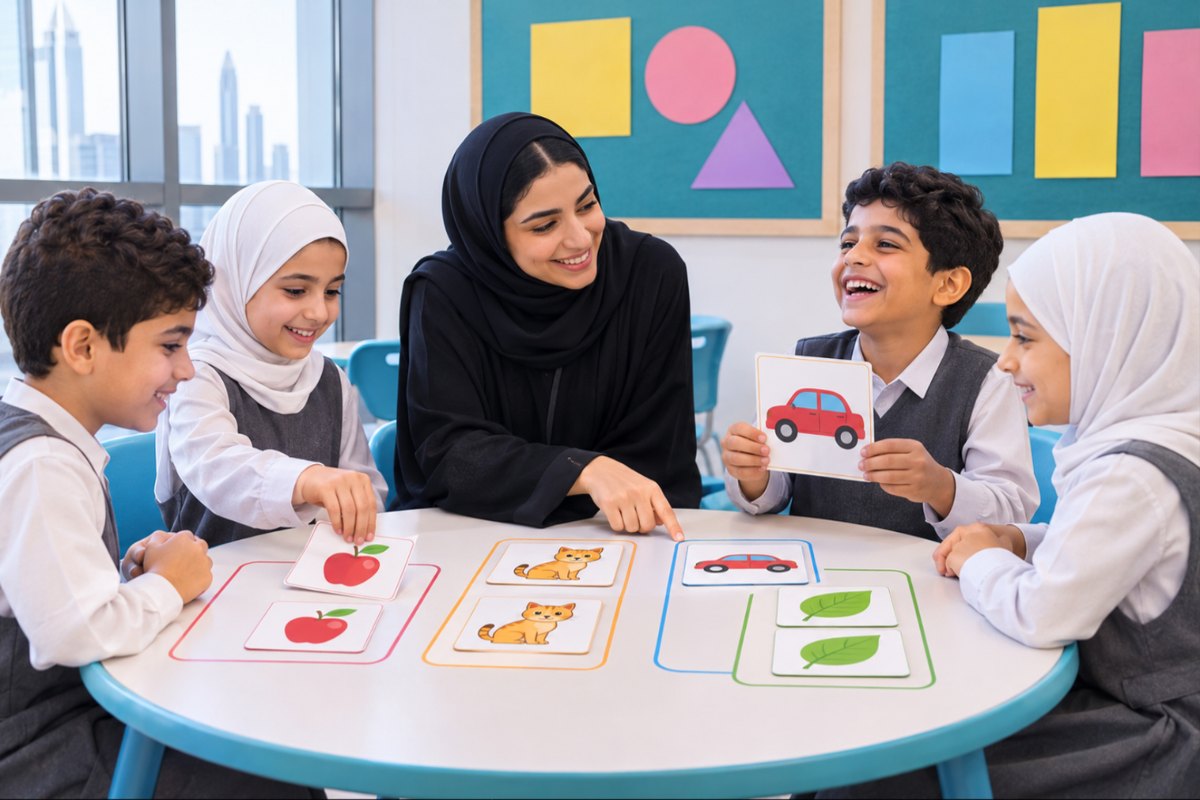
They study three areas that repeat at every stage with growing depth: the basics of AI, responsible and ethical use, and applications and innovation. That's what the Ministry's framework sets out, dividing the grades into three cycles:
- Kindergarten to Grade 4: AI is a tool built by people that follows instructions and uses data, can make mistakes when instructions are unclear, and has no feelings or moral judgment.
- Grades 5 to 8: how systems learn from data and algorithms, along with bias, privacy, misinformation and AI-generated content.
- Grades 9 to 12: data quality, system design, governance and ethics, and research projects where students build and evaluate prototypes.
In other words, the subject isn't about learning one particular tool. It's about understanding how systems work and when not to rely on them. The 2026/2027 teaching plan includes a subject titled "Artificial Intelligence and Technology".
The source we reviewed doesn't say when each private school will start, or what it will look like in international-curriculum schools, so ask your school about its plan.
Read also: Coding and AI in Schools: What Changed in Egypt and the Gulf?
How can you support them at home without being an expert?
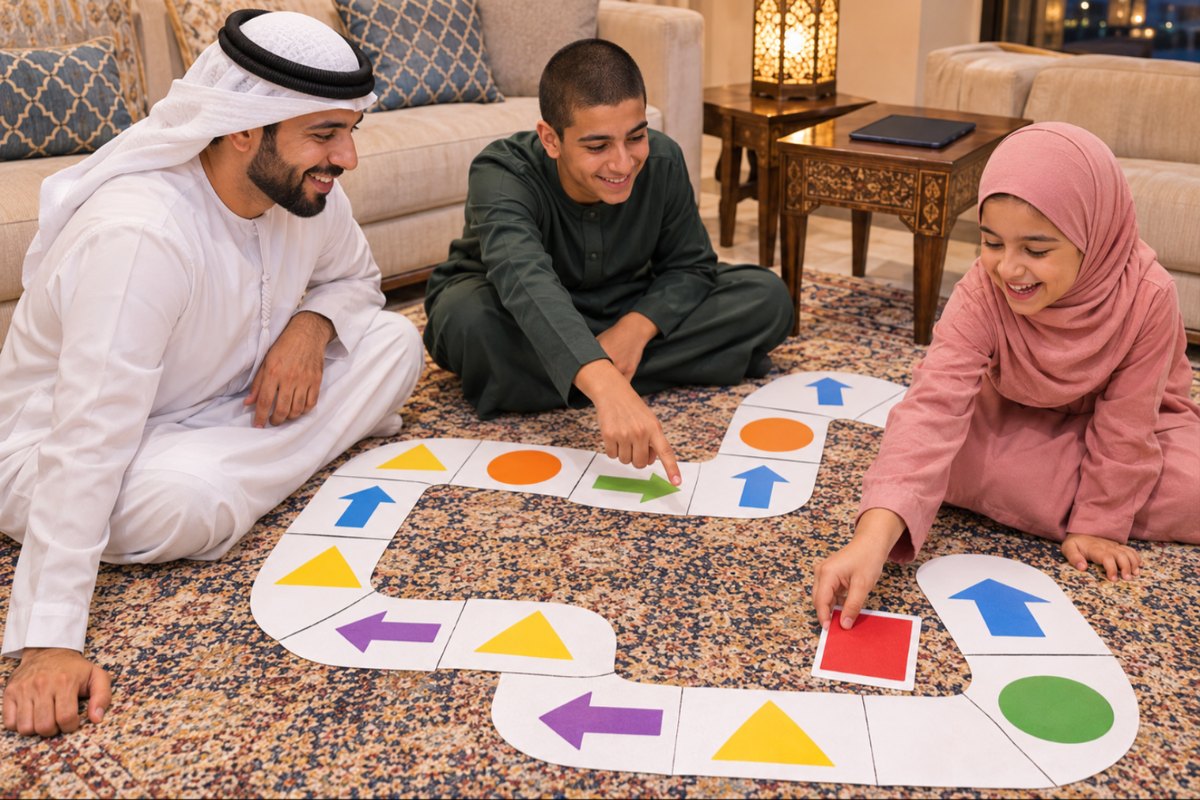
Support them with simple activities that match what they learn in class, and that mostly don't need a device. According to The National on September 24, 2026, schools such as Nord Anglia Abu Dhabi, Dubai Schools and GEMS rely in the early years on stories, play, sorting and discussion rather than screens.
Kindergarten to Grade 4: instructions, rules and patterns
- The unclear instructions game: they ask you to draw a house by their instructions, and you follow them literally, so they see how unclear instructions cause mistakes.
- "If... then..." rules: for example, "if the card is red, put it on the right", which trains the simple rules systems use to decide.
- Sorting: by shape, colour or size, which is how systems begin to recognise patterns.
These activities are our suggestion, and they sit close to what the framework lists for this cycle: patterns, simple rules, and the idea that AI can make mistakes.
Grades 5 to 8: data and bias
- Ask: if we taught a system what a doctor looks like using only three pictures, what could it get wrong? That brings them close to missing data and bias.
- Check a picture or a news item together: who posted it, and is there another source? AI-generated content is part of this cycle.
- Try a ready-made activity from Hour of AI by Code.org.
Grades 9 to 12: projects and ethics
- Ask them to explain their project to you: what they tested, and where the system went wrong.
- Discuss a real case: who is responsible if an automated system makes a wrong decision? The third cycle includes ethical case studies.
- Encourage them to keep their projects along with their notes, since the framework lists project portfolios as a form of assessment. If they want to build a model themselves, there is a track in AI and machine learning.
Do students use generative AI tools at school?
Not before age 13 or Grade 7, under the Ministry of Education's rules. In February 2026 the Ministry announced a guide that bars generative AI tools for students under 13 or in grades below Year 7. Among its other rules:
- Using them in exams and official assessments is banned.
- Presenting AI-generated work as the student's own, without disclosure or teacher approval, is banned.
- Entering personal data of students, teachers or parents is banned, including names, photos, audio and video.
Education Middle East reports the same details. According to the Ministry's framework, the guide governs use in Grades 7 to 12 in public schools and in private schools that follow the Ministry's curriculum. Schools on other curricula have their own policies, so ask your school. These rules apply to the classroom, which doesn't mean home has no limits, so it helps to keep the same agreement with your son or daughter.
How are students assessed in this subject?
Their own school assesses them. The framework says the subject is assessed through school-based assessments prepared by class teachers, focused on understanding and critical thinking rather than memorising. Examples include hands-on projects and short presentations in the first cycle, project portfolios and case studies in the second, and performance tasks and research in the third. The teacher is looking for students who can explain why they chose their method, how they tested it and what they improved, not recite a memorised answer.
The framework also says the subject prepares students for the PISA 2029 test on media and AI literacy.
Read also: AI: Simple Steps to Start Learning
What three messages can you repeat at home?
Three ideas the national framework is built on, and ten minutes a week is enough to reinforce them without long lessons:
- AI is a tool built by people: responsibility for its results stays with people, not the machine.
- It can be wrong: so we ask where an answer came from and check it before we trust it.
- We don't type personal details into it: no names, photos or ID numbers. The framework itself says learning materials must not require students to enter personal data into external systems.
If your son or daughter repeats these ideas in their own words, they've understood the most important thing the subject wants from them.
How does Megaminds Academy help students understand AI?
At Megaminds Academy, we teach students aged 6 to 16 coding, robotics and AI and machine learning in live online classes, in small groups with certified instructors. Every student builds real projects and earns an accredited certificate after each level, so they have work they can explain in their own words.
Frequently asked questions about the AI subject in the UAE
Does the AI subject in the UAE cover private schools too?
The Cabinet approved a curriculum for all public and private schools in September 2026, but the source doesn't say when each school starts. International schools follow their own policies, so ask your school about its plan.
Can my son or daughter use ChatGPT for homework?
The Ministry's rules bar generative AI tools below Grade 7 and for students under 13. In higher grades, use must be disclosed or approved by the teacher. At home, read each tool's terms and never enter your family's personal data.
Does the subject need a computer at home?
Not necessarily in the early grades, since schools in the UAE use stories, play and sorting without screens in the first years, according to The National. In older grades, ask your school which devices and tools it expects.
Finally, you don't need to understand algorithms to support your son or daughter. You need to ask how they knew, and what happens if the system is wrong. Start with one activity this week.
Book a trial class and let them build their first project.