
ICT Subject in Egypt: What It Is and Does It Count?
On 19 August 2026, Egypt's education minister issued the decree on study and assessment for primary school in 2026/2027. It says information and communication technology is a subject whose marks are not counted in the overall total, according to Cairo24.
You may have been asking yourself ever since: is ICT just the computer class? Is it programming? And should you worry about its grades?
The ICT subject (Information and Communication Technology) is what this guide explains: where it is taught in Egypt, what students study at each stage, how it is assessed, whether it counts toward the total, how it differs from programming, and how you can help at home.
What is the ICT subject?
ICT teaches students to use technology with purpose: producing documents and presentations, working with data, searching safely, and understanding how systems and networks work. The Cambridge IGCSE ICT syllabus states its aims as understanding the components of ICT systems and networks, analysing, designing, implementing and testing them, and using them safely and responsibly. That is closer to workplace technology skills than to writing code. The ministry's books show the same idea in lessons on internet safety, operating systems, email and database design.
Where is ICT taught in Egypt?
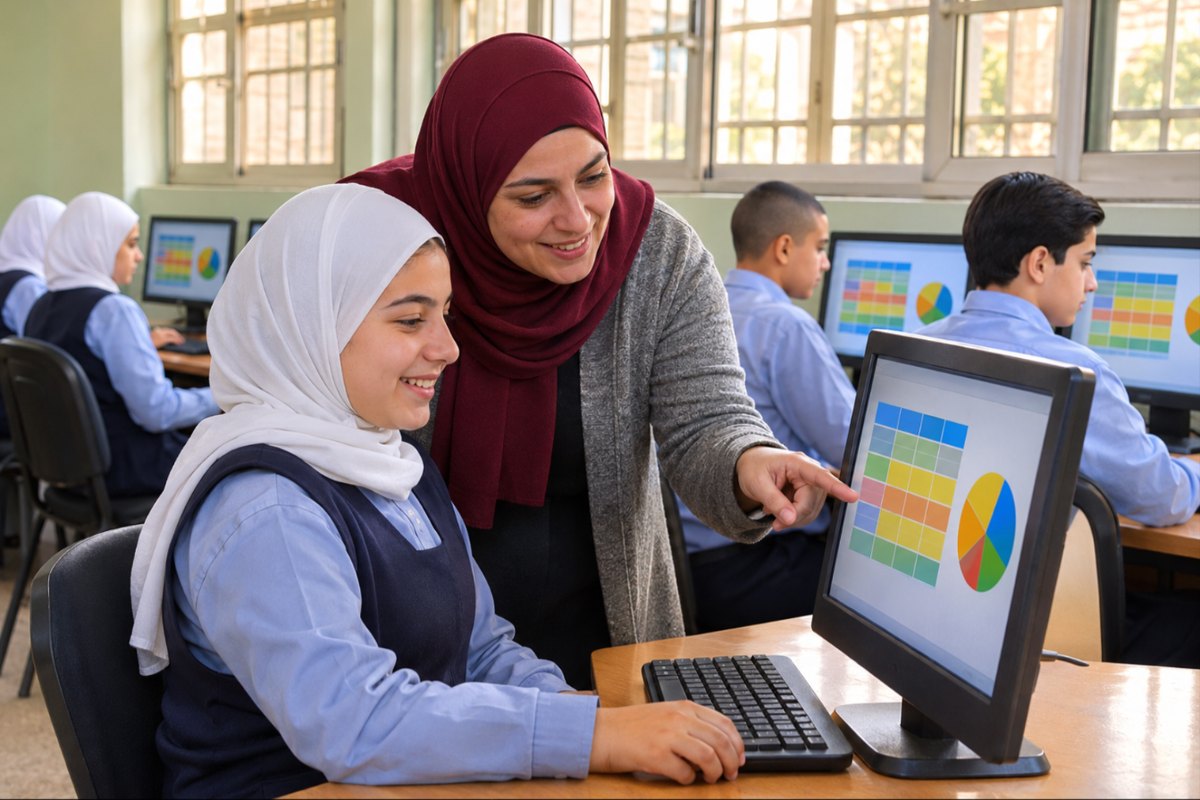
It is taught in two tracks: the national curriculum, which the Ministry of Education sets under the name information and communication technology, and international programmes such as Cambridge IGCSE ICT (code 0417) in schools that offer them. Here is what the ministry's e-library and Cambridge show:
- Primary: ICT books for grades 4 to 6.
- Preparatory: the subject "Computer and Information and Communication Technology" for all three grades.
- Secondary: ICT books for each of the three grades.
- International: IGCSE ICT. Cambridge describes IGCSE as the world's most popular international qualification for 14 to 16 year olds, though others can take it too.
What do students study at each stage?
Students start with safe use of devices and the internet, then move to software, databases and networks, and programming appears in secondary school. Here are examples from official books, with each year:
- Grade 4 primary (first term 2026/2027): two units: the role of information technology in our lives (devices, operating systems, data sources) and digital safety (internet risks, ethical use, searching), according to Egypt Telegraph on 29 September 2026.
- Grade 1 preparatory (first term 2026/2027): the official book has ten lessons, including digital transformation, operating systems, email, cloud computing, database design and a digital project.
- Grade 1 secondary (2025/2026 edition): the book "Programming and Artificial Intelligence: An Introduction to ICT" has thirteen units, including information security, networks, databases, data analysis, programming and generative AI.
- IGCSE ICT: 21 content sections, starting with computer components, networks, the effects of technology and safety, then practical skills in documents, databases, presentations, spreadsheets and website authoring.
How is ICT assessed, and does it count toward the total?
The answer depends on the system, so we separate them. In national primary school, ICT marks are not added to the overall total, and in IGCSE the subject earns its own grade from A* to G.
- National curriculum, primary: a school subject whose marks are not counted in the total, under the 2026/2027 decree. Reports on the decree say nothing about pass or fail for it, so ask the school about the promotion requirement.
- Exam format: the ministry set 70% of ICT questions as essay and 30% as objective for primary and preparatory in 2026/2027, according to Al-Watan on 4 October 2026. It also offers weekly assessments to download from its e-library, so students can practise both types.
- Preparatory and secondary: we found no published ruling on how ICT is counted at these stages, so ask the school before you relax or worry.
- IGCSE ICT: three papers: theory 40% (1 hour 30 minutes), document production, databases and presentations 30%, and spreadsheets and website authoring 30% (2 hours 15 minutes each). Cambridge designs the syllabus for about 130 guided learning hours per subject. How the grade counts for entry to an Egyptian university depends on equivalence rules and each faculty, so ask the school.
What is the difference between ICT, Computer Science and programming?
ICT teaches how to use technology and understand its systems, while Computer Science teaches how computers work and how to program them. In short:
- ICT: documents, spreadsheets, databases, presentations and digital safety, and none of the 21 IGCSE ICT content sections is about programming.
- Computer Science: algorithms, computational thinking and programming. The IGCSE Computer Science 0478 syllabus uses Python 3 as the only language for teaching and assessment.
- In the Egyptian curriculum: programming has started to appear inside ICT itself: the grade 1 secondary book has one unit on programming and another on generative AI.
Read also: How to Teach Computer Skills Effectively
How can you help your son or daughter at home?
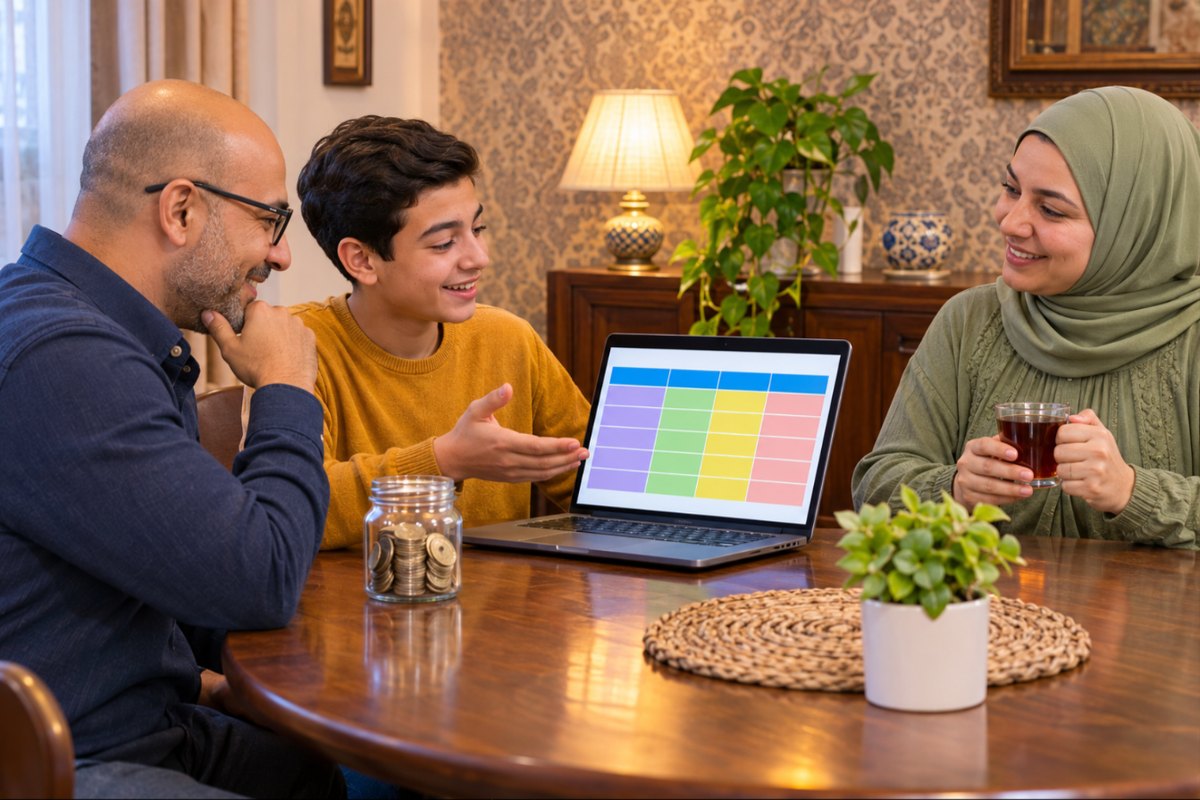
Turn the subject into small tasks they carry out themselves, because most of ICT is practical skill that sticks through use. Try these steps:
- Open their book together in the e-library, and let them explain one lesson to you each week.
- Solve the weekly assessments with them, available in the same library.
- Talk about digital safety with the Interland game from Google's Be Internet Awesome programme, an online game in Arabic with four adventures on the basics of online safety.
- Ask for real tasks: a document about a family trip, a presentation about their hobby, a simple spreadsheet for their pocket money. These are the same skills the two practical IGCSE papers test.
- Try past papers if they study IGCSE: Cambridge publishes a selection of them on its website.
Read also: Effects of Too Much Screen Time and How to Reduce Them
How does ICT lead to programming?
ICT leads to programming because it teaches students how data is stored and organised, and that raises the next question: how do I write instructions that do this automatically? The natural path:
- Spreadsheet and database: they learn conditions, formulas and queries.
- Scratch: it turns the same logic into code blocks, and the Scratch Foundation says it is free for everyone.
- Python: the only language used in Cambridge's Computer Science syllabus, and a suitable next step after Scratch.
Read also: Discover Scratch Coding
How does Megaminds Academy help with the move from ICT to programming?
At Megaminds Academy, we teach students aged 6 to 16 coding, Python and AI in live online classes, in small groups with certified instructors. We do not teach the school ICT curriculum, but we build the step that follows it: turning what students know about data and devices into real programming projects, with an accredited certificate after each level.
Frequently asked questions about the ICT subject in Egypt
Does the ICT subject count toward the total?
In national primary school its marks are not added to the overall total, under the 2026/2027 decree. In IGCSE it earns its own grade from A* to G. For preparatory and secondary, ask the school about the decision for your stage.
Is ICT the same as programming?
No. ICT focuses on using technology and understanding its systems, such as documents, databases and digital safety. Programming means writing instructions for a computer, and it appears clearly in the Egyptian curriculum from grade 1 secondary and in international Computer Science.
From which grade does ICT start in Egyptian schools?
The ministry's e-library shows ICT books starting from grade 4 of primary school. International schools each follow their own plan, so ask your son or daughter's school which grade the subject starts in and which curriculum it follows.
Finally, ICT is a set of skills to practise, not a subject to memorise, and each skill brings your son or daughter closer to programming.
Book a trial class now and let them build their first programming project.