
Should Kids Still Learn to Code in the Age of AI?
Your son is at the screen. He asks an AI tool for a small game, and dozens of lines of code appear in seconds. Then he turns to you and asks: "Why should I learn coding if AI writes it for me?"
It's a fair question, and you may have asked it yourself before booking any course.
The short answer: yes, kids should still learn to code, but the goal has changed. The point is no longer memorizing commands. It's breaking a problem down, understanding what AI writes, and catching its mistakes. Nobody picks up those skills by just pressing "generate".
This article covers where the debate came from, what the numbers say, what has actually changed, and what the right path looks like at each age.
Where did "is coding dead?" come from?
The debate took off in February 2024, when Nvidia CEO Jensen Huang said at the World Government Summit in Dubai that the job of technology makers is to make programming unnecessary for everyone, as Tom's Hardware reported.
But the people building AI coding tools aren't saying understanding has lost its value. Replit CEO Amjad Masad has advised learning a bit of coding, along with how to think and break down problems, according to Analytics India Magazine in April 2025.
What do the numbers say about the future of coding?
The available data suggests people who understand technology are still needed. Three signals stand out:
- Developer jobs are still growing: the US Bureau of Labor Statistics projects jobs for software developers, QA analysts and testers growing 10% from 2025 to 2035, much faster than the average for all occupations. These are US figures, but they're a useful read on where the industry is heading.
- The tools are everywhere, trust is limited: in the 2025 Stack Overflow survey of more than 49,000 developers, 84% said they use or plan to use AI tools, while 46% said they don't trust the accuracy of the output, up from 31% a year earlier.
- Tech skills lead the list: the World Economic Forum's Future of Jobs Report 2025 puts AI and big data, networks and cybersecurity, and technological literacy at the top of the fastest-growing skills.
The bottom line? AI hasn't removed the need for people who understand technology. It has raised the value of those who can direct and review it.
What has actually changed about learning to code?
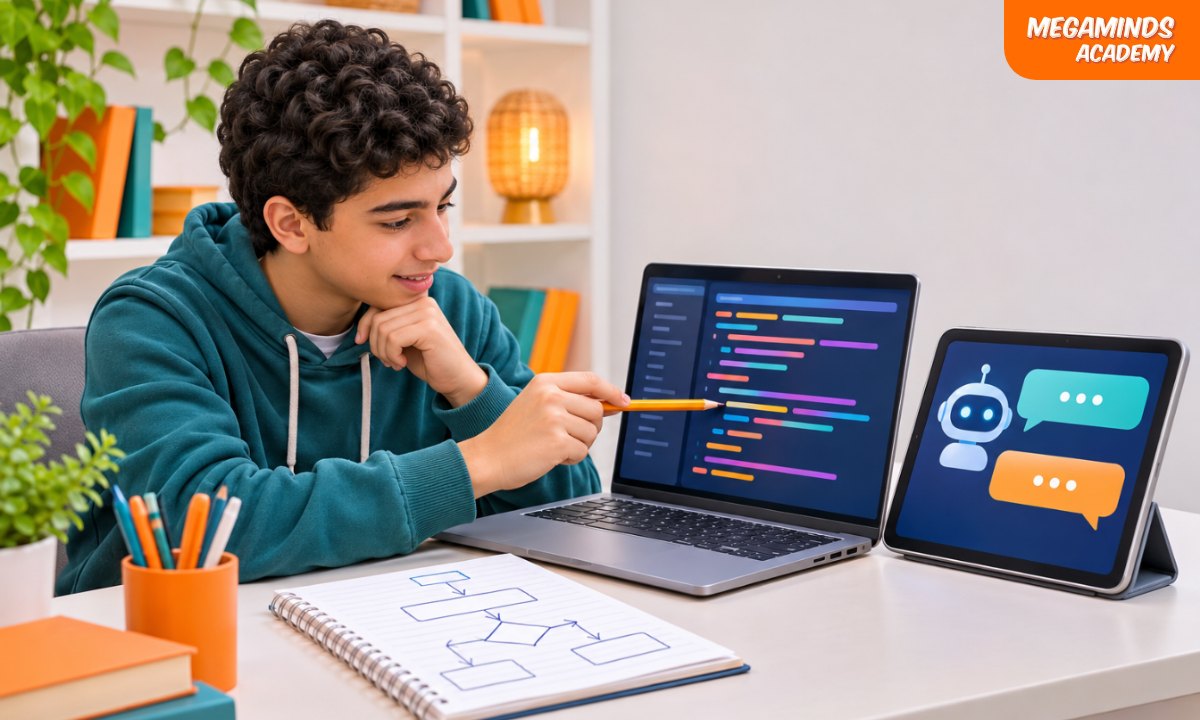
The order of priorities has changed. What used to start with typing commands now starts with describing an idea clearly, but the foundation is still required. Three shifts matter most:
1. From memorizing commands to breaking down problems
Vague requests get poor results. A student who has learned to split an idea into small steps knows exactly what to ask for, and how to test what comes back.
2. From writing code to reading and reviewing it
AI writes code that sometimes works and sometimes doesn't. Your son or daughter will only catch the error if they understand variables, conditions and loops. That makes the fundamentals a requirement, not a luxury.
3. From finishing exercises to building real projects
Reaching a first result is faster now, which leaves more time for design, testing and revision. That's where most of the learning happens.
Read also: Boost Problem Solving with Simple Tips
Why isn't relying on AI alone enough?
Because it hands over an answer without the ability to judge it. That's why Estonia designed the app for its national AI Leap program to guide students with questions instead of giving answers directly, according to the program's official factsheet.
Students who only copy results miss some essential skills:
- Knowing when an answer is wrong, even when it sounds convincing.
- Changing a program when the requirements change.
- Explaining what they built in their own words.
- Staying patient with errors, which is the heart of learning to code.
Read also: What Is Vibe Coding? A Parent's Guide to Coding with AI
What should young learners study at each age?
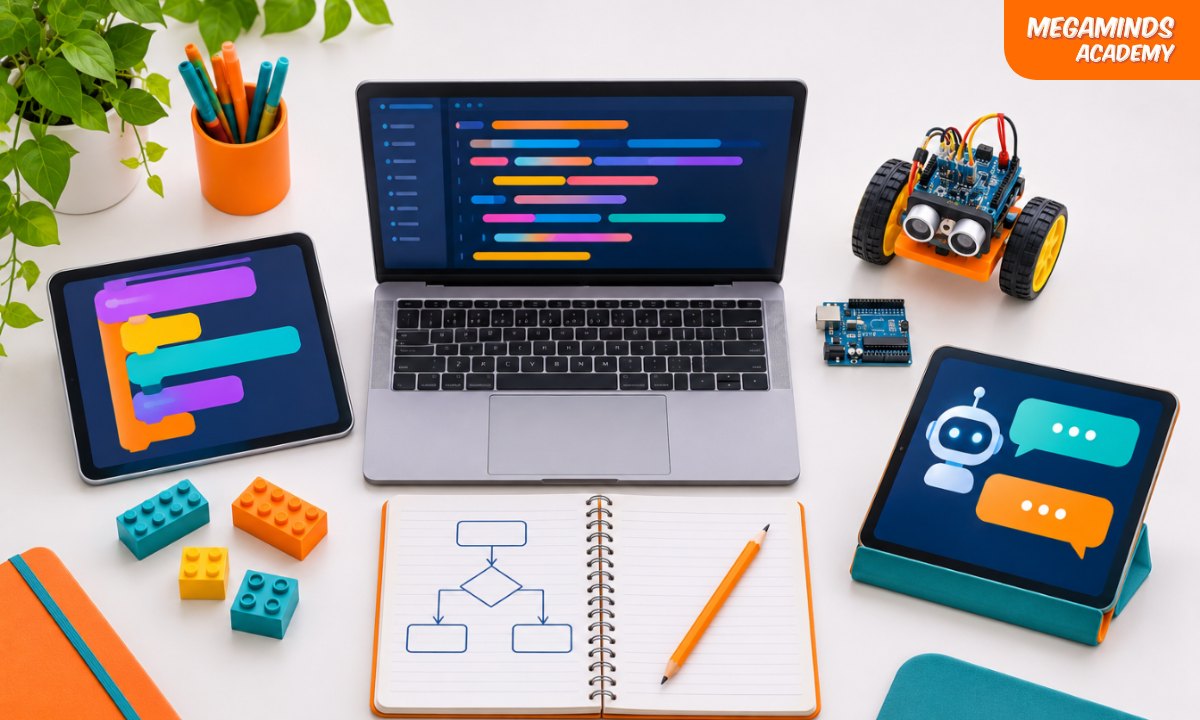
The right path depends on age. Here's a practical map to start from:
Ages 6 to 9: thinking before code
Start with coding blocks in Scratch, where students pick up sequence, conditions and repetition through games and stories. They don't need their own account on AI chat tools at this age.
Ages 10 to 12: a first real language
This is a good time to move to Python, with a simple grasp of machine learning. Keep in mind that OpenAI says ChatGPT isn't meant for anyone under 13, so at this stage the work rests on a good teacher and a good curriculum.
Ages 13 to 16: real projects with AI as an assistant
Now they can build a website or an app, or take the cybersecurity track, using AI tools as a helper rather than a replacement. OpenAI requires parental consent for users aged 13 to 18.
How can you turn AI into a helper at home?
You don't need a technical background. A few simple rules are enough:
- No code without an explanation: ask them to walk you through what each part does.
- Try first: they attempt it themselves, then ask the tool about the error rather than for the full solution.
- Edit by hand: they change something in the code and predict the result before running it.
- Protect personal data: no full names, addresses or personal photos in any tool.
- Set the time: clear screen hours within a balanced day.
Read also: Effects of Too Much Screen Time and How to Reduce Them
What do they gain from coding even if they never become programmers?
Not every student needs to become a software developer. The bigger value is the way of thinking that stays with them in whatever field they choose:
1. Logical thinking
They learn to order steps, predict results and link cause to effect. It carries over to math, science and even how they plan their day.
2. Patience with mistakes
A program that fails the first time is normal in coding. With repetition, they learn that an error is useful information, not failure.
3. Digital literacy
People who understand how apps are built use them more carefully, ask about their data, and can tell a reliable answer from a misleading one.
4. Moving from consuming to creating
Instead of only spending time on what others made, they start making their own game or website. That's a big shift in their relationship with screens.
Read also: The Benefits of Learning Coding at a Young Age
What are the common mistakes when teaching coding in the age of AI?
Four mistakes come up often, and they're easy to avoid:
- Starting with the tool before the foundation: they get a quick result, then stall at the first error because they don't understand what's in front of them.
- Judging only by the result: a game that works doesn't mean they understand it. Ask how it works, don't just watch it.
- Banning it completely: keeping these tools from a 15-year-old delays them on tools they'll meet in school and work. Clear limits work better.
- Expecting quick results: coding builds over time, and the payoff won't show within a few weeks.
How does Megaminds Academy help?
At Megaminds Academy, we teach students aged 6 to 16 coding, robotics and AI in live online classes, in small groups with certified instructors.
Every student starts with fundamentals suited to their age, then builds real projects and earns an accredited certificate after each level. More than 15,000 students in over 32 countries have joined us.
Frequently asked questions about coding in the age of AI
Will AI take programmers' jobs?
Nobody can say for sure what jobs will look like in ten years, and some tasks are already changing. But official US projections still show software developer jobs growing through 2035, with more value for people who understand and review code.
Is learning to use AI tools enough?
No. Using a tool without the fundamentals leaves a student unable to spot errors or adjust the result. It's better to learn the basics first, then use the tools to work faster.
What's the best language to start with now?
Scratch suits ages 6 to 9, and Python is a strong choice from about age 10 because it's easy to read and widely used in AI. Here's a guide to the easiest languages to start with.
Finally, AI hasn't made learning to code pointless. It has made how you learn it matter more. A student who understands what they're building will direct the tools, while others settle for whatever the tools give them.
Book a trial class and let them start from the right foundation.