
Young Coders Who Inspired the World: 5 True Stories
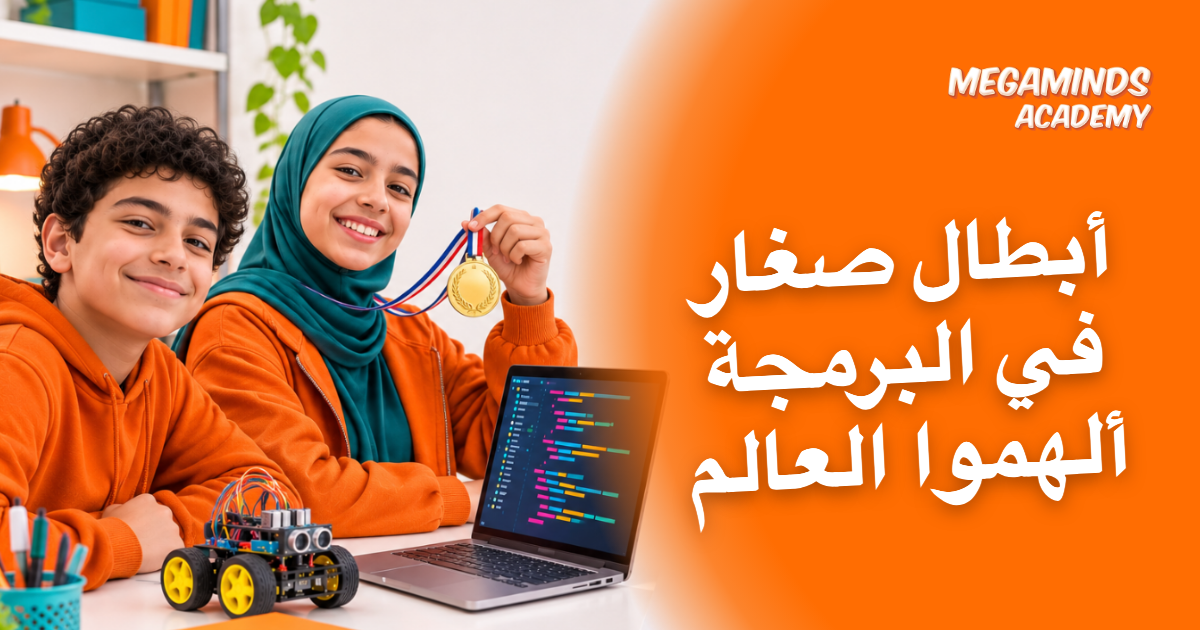
In August 2026, news spread of an Egyptian fourth grader who took a gold medal in an international Python contest that drew more than 7,000 competitors.
Does that sound like a one-off you could never repeat at home?
It isn't. Stories of kids who code now come from all over: an Irish student whose AI tool supports cancer doctors, an American teenager whose website protects seniors from scams. What connects them isn't talent alone. It's a real project that started small, organized time, and a family close enough to help.
This article tells five documented stories from Egypt, Europe and America, then pulls out what you can use with your own son or daughter starting today.
Martyros Mina: Python gold from Egypt
Martyros Mina is an Egyptian fourth grader. According to Al Khaleej (August 2026), he reached the gold level in a global coding contest run from China for ages 10 to 14, solving 10 programming problems in about two hours, remotely and under strict electronic monitoring.
His mother says he started Python at seven, after working up through robotics and Arduino. She credits part of his success to organized time and limited screen hours, alongside swimming and piano.
The medal wasn't the end of it. Martyros also designed a tour-guide robot inspired by Tutankhamun, and President Abdel Fattah El-Sisi honored him at Egypt Forum 2026, Youm7 reported in October 2026.
Read also: Python Basics: A Fun Gateway to the World of Coding
Kautilya Katariya: a world record at six
In the UK, Kautilya Katariya became the world's youngest qualified computer programmer at age six, The Next Web reported in 2021 on his Guinness record. He got there through a series of IBM lessons that included AI, collecting at least six certifications in AI and data science.
A few years later, he earned an A* in A-level maths at age 10. The takeaway is simple: well-sequenced learning material, and curiosity that someone nurtures.
Aoibheann Daly: AI in service of brain cancer patients
In January 2026, Aoibheann Daly, a 15-year-old Irish student, won the top prize at Ireland's Young Scientist and Technology Exhibition, worth €7,500.
Her project, GlioScope, helps doctors predict which genetic mutations are likely to be present from an MRI brain scan, reducing reliance on invasive biopsies, according to RTÉ. In September 2026 she received the Special Jury Award for Youth at the EU Contest for Young Scientists in Kiel, Germany.
Tejasvi Manoj: a website that protects seniors from scams
Tejasvi Manoj's story started at home. Her 85-year-old grandfather received a fraudulent message asking for $2,000, and her father stepped in before any money went out, Gulf News reported.
Tejasvi turned that close call into Shield Seniors, a website that helps adults over 60 understand online scams. In September 2025, at 17, she was named Kid of the Year by TIME and TIME for Kids.
Sharvi Mahajan: a wearable that warns drivers before they nod off
In San Diego, 14-year-old Sharvi Mahajan built NeuroDrive Alert, a wearable that uses brainwave monitoring and machine learning to spot early signs of fatigue and warn the driver. It earned her third place in the 2026 3M Young Scientist Challenge.
Are these just isolated cases?
No. The numbers show a whole generation building things. The Coolest Projects 2026 online showcase drew more than 15,000 young creators with over 4,500 projects from 40 countries, and 47% of them were girls.
In Egypt, an Egyptian team placed highly at a robotics championship in China that brought together more than 5,000 students and 2,300 teams from 42 countries.
Read also: Top Coding and Robotics Competitions for Kids Worldwide
What do all these stories have in common?
The countries, ages and projects differ, but five things show up in nearly every story:
- A real problem: a grandfather almost scammed, a tired driver on the road, not an exercise from a textbook.
- A gradual start: none of them opened with something complex. Small lessons added up over time.
- A family that supports without pushing: organized time, screen limits, room for sports and hobbies.
- Structured learning: courses, certificates and a clear path, not scattered clips online.
- A real audience: a contest, a showcase, or users who try the project and react to it.
Read also: How to Discover a Passion for Coding Through Everyday Activities
How can your son or daughter start their own story?
Nobody needs a medal to begin. Building one thing of their own this month is enough. Here's a practical way to do it by age:
- Ages 6 to 9: a short game with coding blocks in Scratch.
- Ages 10 to 12: a small program in Python, or a simple robot that follows commands.
- Ages 13 to 16: a website or app that solves a problem at home or school, using AI thoughtfully.
This is where Megaminds Academy comes in. We teach students aged 6 to 16 coding, robotics and AI in live online classes, in small groups with certified instructors. Every student builds real projects and earns an accredited certificate after each level, alongside more than 15,000 students in over 32 countries.
Read also: The Coding Success Story of Ramy Mohamed
Our blog has more stories worth reading, including Benyamin Ahmed's journey and Mohammed Hamza Shahzad's story.
Frequently asked questions about young coders
Who is the youngest programmer in the world?
The Next Web reported in 2021 that Guinness World Records recognized Kautilya Katariya of the UK as the youngest qualified computer programmer, at age six. Records can change over time, so Guinness itself remains the most current reference.
Does my son or daughter need special talent to learn coding?
No. Coding depends more on gradual practice than on natural gifts. The stories above all began with small lessons and simple projects, then grew through persistence and organized support at home.
What age should they start learning to code?
Age 6 is a good start with block coding such as Scratch, moving to a text language like Python around age 10. What matters more than the exact age is content that fits their level and keeps them interested.
Finally, not every student will become a world champion, and that isn't the goal. The goal is learning to notice a problem nearby, think it through, and build the fix themselves. That's the common thread in every one of these stories.
Book a trial class and make their first project the start of their own story.